
By Tracy Christenson and Holly Christopher
Students’ health conditions don’t stop when they enter the school building. From offering preventative measures, such as flu shots and hearing and vision tests, to providing emergency care when necessary, qualified, professional health services staff are necessary to care for students with chronic health problems, treat students who become ill or injured at school, and help students to maintain their health. Their importance to the health, safety, and educational success of students cannot be exaggerated.
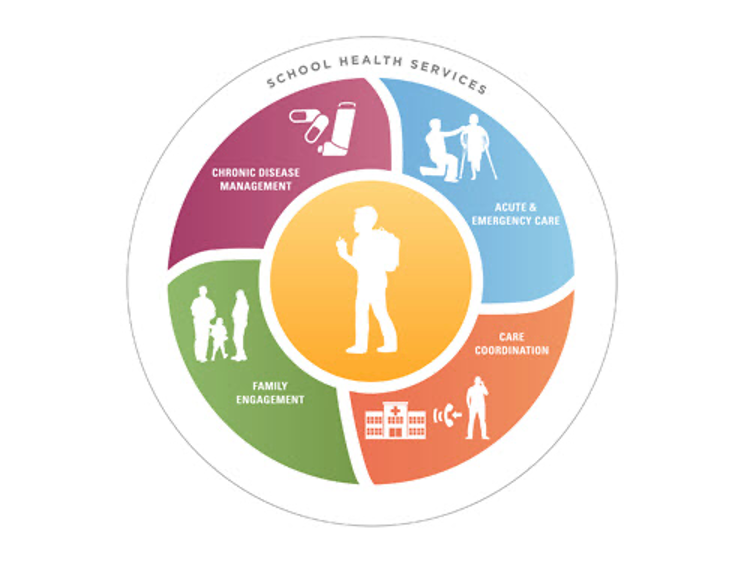
Health Services Offered by Schools
- Acute and Emergency care
- Care Coordination
- Chronic Disease Management
- Family Management
These aspects of school health services work together to ensure that students are safe, healthy, and ready to learn!

Chronic Disease Management
Chronic health conditions don’t stop during school hours. Over 40% of school-age children and adolescents in the United States have a chronic health condition, and it’s important for schools to help students manage their health conditions in the school setting, for the sake of their education and overall well-being. Schools provide health support for students with chronic diseases through school nurses or school health centers, and they help students cope with conditions such as asthma, diabetes, seizure disorders like epilepsy, obesity, poor oral health, food allergies, and other physical conditions, as well as behavior and learning problems. It’s challenging for school health services to help students with many different chronic conditions, but without proper support, students with chronic health conditions may have lower academic achievement and worsening health. Proper management of chronic conditions leads to better outcomes, both in health and education.
Students with chronic illnesses and health conditions will need support from school nurses to help them manage their conditions, often daily. School nurses monitor students with chronic conditions and develop plans for their care during the school day. School nurses communicate with students’ community physicians regarding the specifics of the care needed. A physician’s order is typically provided for the services the school nurse will provide to the student.
In Tennessee, school nursing services provided to students with Medicaid coverage can be reimbursed by Medicaid to the schools. Stellar Therapy Services has been assisting TN schools to receive these reimbursements for school nursing services since 2015.

Other Resources Recommended by the CDC
- School Health Profiles
- Parents for Healthy Schools
- Youth Risk Behavior Surveillance System (YRBSS)
- Fact Sheet: Managing Chronic Health Conditions in Schools: The Role of the School Nurse
- Parent Engagement: Strategies for Involving Parents in School Health
- Promoting Parent Engagement in School Health: A Facilitator’s Guide for Staff Development
Sources
Acute & Emergency Care. Archived. Retrieved May 24, 2025. https://archive.cdc.gov/#/details?archive_url=https://archive.cdc.gov/www_cdc_gov/healthyschools/shs/acute_emergency_care.htm
Chronic Health Conditions in School Settings PPT. 2017. Accessed May 23, 2025.
Emergency Preparedness and Response in the School Setting – The Role of the School Nurse. PDF. Retrieved May 24, 2025. https://files.eric.ed.gov/fulltext/ED558439.pdf
Managing Chronic Health Conditions. July 9, 2024. Accessed May 24, 2025. https://www.cdc.gov/school-health-conditions/chronic-conditions/index.html
Managing Health Conditions in School. July 5, 2024. Accessed May 23, 2025. https://www.cdc.gov/school-health-conditions/health-services/
School Health Services. Archived. Retrieved May 23, 2025. https://archive.cdc.gov/#/details?url=https://www.cdc.gov/healthyschools/schoolhealthservices.htm
Leave a Reply